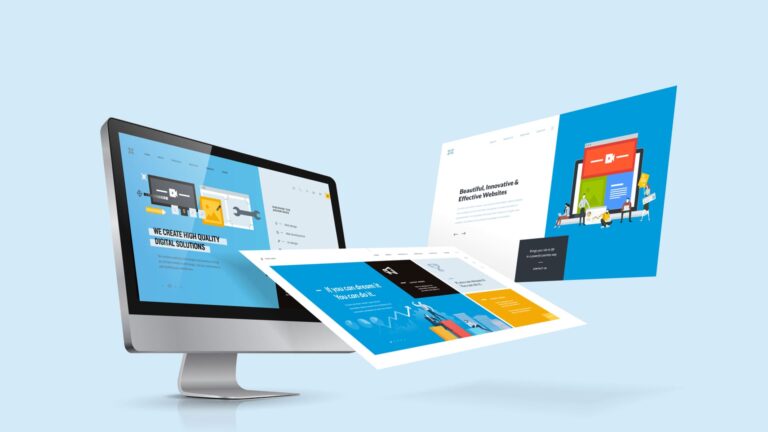
Creating a website for your business or digital marketing efforts is crucial for staying relevant in the market. However, many people do not realize that simply putting something online is not enough. It is important to focus on key elements of web design to ensure that your site looks great and functions effectively.
One essential aspect of a good website is the font type. Selecting a clear, easy-to-read font with appropriate accents can enhance the usability of your website and add to its visual appeal.
In the following sections, we will discuss how to strategically choose the right fonts for your website.
5 Tips for Choosing the Right Fonts for Your Website
1. Choose Fonts That Align with Your Brand Tone
Selecting the perfect fonts for your website can enhance your audience’s viewing experience.
The first step to making the right choice is to ensure the fonts match your brand voice and design theme. This alignment creates a unique and cohesive look that ties your website together—something customers truly appreciate.
Pay attention to how each font appears and feels, considering how well it represents your brand. Remember, simplicity is often key in web design, so limit your selection to a few fonts to avoid confusing your visitors.
2. Ensure Fonts Are Easy to Read
Finding the right font is crucial for creating a professional and attractive website. To facilitate an easy reading experience, select fonts that are readable. Readability involves choosing fonts with appropriate spacing between letters, clear curves, visible terminals, and ample width and height for each character.
Depending on your site’s purpose, some readability rules may be more significant than others, so make sure to conduct thorough research.
3. Use Complementary Fonts
The right font choices can distinguish an attractive online presence from a less modern and professional appearance. With countless fonts available, it can be challenging to know where to start.
One effective tip is to use complementary fonts. By combining different font styles, you can highlight important elements on your site while maintaining a cohesive look that is easy for visitors to navigate.
A well-chosen combination of fonts also fosters a unique visual identity for your website, helping viewers remember who you are and what you do.
4. Consider Website Accessibility
Accessibility is a crucial factor when choosing fonts for your website. Not only does creating an accessible site benefit all users, including those with disabilities, but it can also improve SEO and user interaction.
When selecting fonts, opt for those that are clear and appropriately sized, while avoiding those that are difficult to read due to weight. Ensuring high contrast between the text and background is essential for readability and for making your content accessible to everyone.
Designing for inclusivity is key and can be a valuable asset for your business in the long run.
5. Determine Sizing and Visual Weight
Font sizing is essential to consider because it affects usability; text that is too large or small can be challenging to read. Visual weight refers to a font’s thickness, which can influence its legibility, especially when using multiple typefaces.
By carefully assessing both sizing and visual weight, you can select fonts that enhance visibility and readability for your audience.
Frequently Asked Questions
- Why does font choice matter for websites?
Fonts play a crucial role in readability, brand perception, and user experience. The right font can make your content easier to read and help convey your brand’s tone and professionalism. - How many fonts should I use on a website?
Ideally, limit yourself to 2–3 fonts: one for headings, one for body text, and optionally one accent font. Using too many fonts can confuse visitors and disrupt visual consistency. - What’s the difference between serif and sans-serif fonts?
Serif fonts have small lines at the ends of characters (e.g., Times New Roman), giving a more traditional look. Sans-serif fonts (e.g., Arial, Helvetica) are clean and modern—great for screens and readability. - How can I tell if a font is readable on all devices?
Test the font across different screen sizes and browsers. Choose web-safe or Google Fonts that are optimized for clarity and loading performance. Pay attention to letter spacing, line height, and contrast. - Are there specific fonts that work best for accessibility?
Yes. Fonts like Roboto, Open Sans, Lato, and Tahoma are often praised for their readability. Look for fonts with clear character distinctions and avoid overly decorative or script fonts for body text. - How do I find fonts that pair well together?
Use tools like Fontpair.co, Google Fonts, or Adobe Fonts to explore complementary font combinations. Typically, pairing a bold display font for headings with a clean sans-serif for body text works well. - Can font size affect SEO or usability?
Absolutely. If your text is too small, users may leave your site—leading to higher bounce rates. Google recommends a minimum body font size of 16px for readability on mobile devices. - What’s the best font size for headings and body text?
For body text: 16–18px
For headings: H1 (32–36px), H2 (24–30px), H3 (18–22px)
Ensure a clear visual hierarchy so users can scan your content easily. - Should I use custom fonts or stick to standard ones?
Custom fonts can enhance branding but may affect load times. Stick to web-optimized fonts (like Google Fonts), and use font-display: swap in your CSS to avoid blocking rendering. - What tools can help me test or choose website fonts?
Helpful tools include:- Google Fonts – Free web-safe font library
- WhatFont – Browser extension to identify fonts on websites
- Fontjoy – AI font pairing generator
- TypeScale – Visual tool for sizing font hierarchy
Wrap-Up: Let Your Fonts Speak Your Brand’s Language
We hope you enjoyed this exploration of how to select the right fonts for your website. The next time you’re stuck in front of a blank screen trying to decide which font will best represent your brand, remember these simple tips, and you’ll be on your way.
And if all else fails, give us a call. We’d be happy to help you with web design services that will make your site look amazing and correctly reflect the image you want to project to the world.